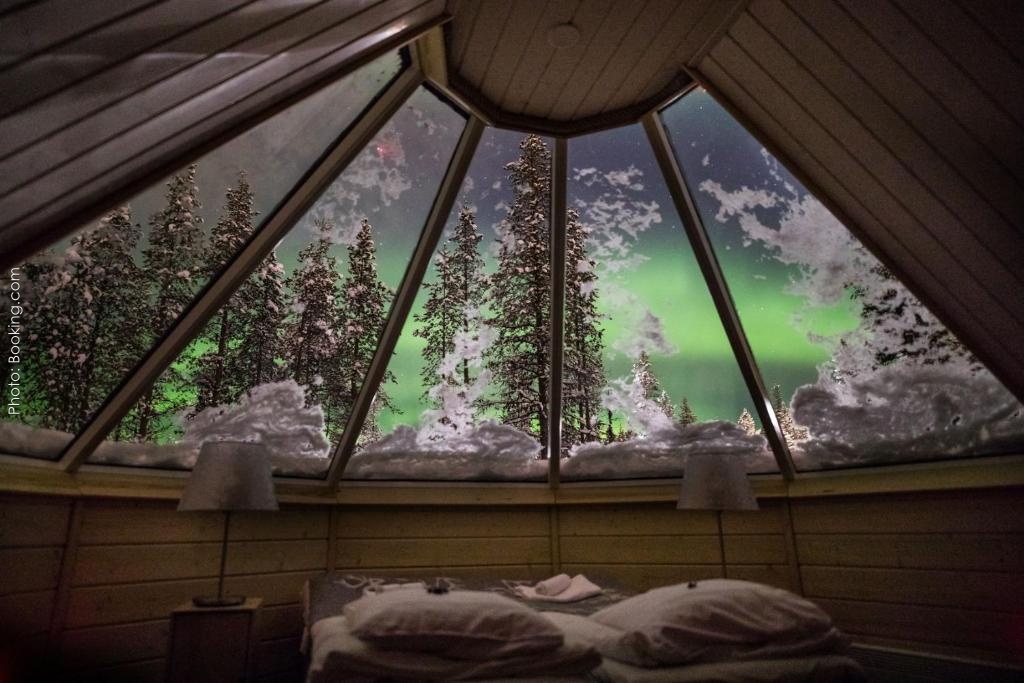
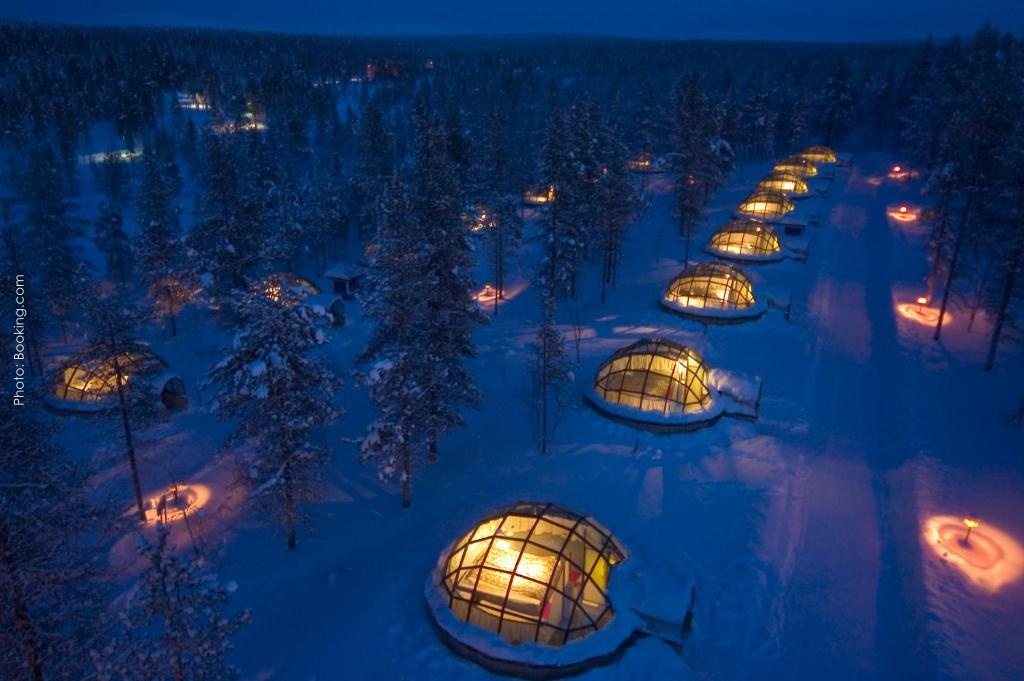
Glass igloo prices have a reputation for being eye-watering, and during Christmas week they absolutely are. But the same experience, with identical aurora odds, is available at a fraction of the cost if you know when to book. This guide breaks down exactly what drives prices, when they peak, when they drop, and how to get the best value out of your Lapland Northern Lights stay.
2026-2027: Still an Exceptional Aurora Season
Solar Cycle 25 peaked in 2024-2025 - the strongest solar maximum in over a decade. The good news for 2026-2027 travellers: the declining phase of a solar maximum still produces significantly above-average aurora activity compared to solar minimum years. NOAA forecasts confirm 2026 geomagnetic activity remains well above the long-term average.
In practical terms: you are still more likely to see a spectacular aurora display in 2026-2027 than in any year between 2017 and 2023. The absolute peak is behind us but the window is still wide open - and prices have not yet caught up with the increased demand this solar maximum created.
Price by Month - What to Expect
Glass igloo prices follow a predictable seasonal pattern. The calendar below shows typical price levels for a standard glass igloo for 2 persons in Finland. Individual hotels vary, but the pattern holds across the market.
The pattern is clear: September, October and April are the sweet spot - you get full aurora season conditions at prices 40-60% below peak winter. December is the most expensive month by far, with Christmas week commanding nearly triple the September rate at the same hotel.
What Actually Drives Glass Igloo Prices
1. Season and Darkness
The fundamental driver is simple: how dark are the nights? Resorts charge most when darkness is maximised (November to February) and least when it is minimal (May to July). The paradox is that December, the most expensive month, is not statistically the best for aurora. February and March have clearer skies because snowfall is less frequent, yet prices are lower than December. Aurora hunters who understand this consistently choose February-March over December-January.
2. Holiday Dates
Christmas (December 20 to January 3) and New Year's Eve carry a premium of 80-200% above standard winter rates. Schools are out across Europe and demand spikes sharply. Most resorts sell out these dates 6-12 months in advance. If you want to go at Christmas, book in February or March of the same year. If you miss that window, you will be paying premium rates for whatever remains available or looking at last-minute cancellations.
3. Location Within Finland
Northern Lapland (above 68N, the Saariselka-Inari corridor) commands prices roughly 200-400 euros more per night than Rovaniemi-area properties for equivalent quality. The reason: darker skies, better aurora statistics, and fewer competing options. If your primary goal is aurora viewing, the price premium for going further north is often worth it. If you want a balance of igloo experience with easy access to activities, Rovaniemi or Levi gives better value.
4. Amenity Level
A basic glass igloo with shared bathroom and minimal facilities starts around 200-250€ per night. Add a private bathroom and you are at 300-350€. A private sauna adds another 100-200€. A private outdoor jacuzzi with heated decking, butler service and panoramic views takes you to 700-900€. The glass roof is the same in all of them - what you are paying extra for is comfort and privacy while you wait for the lights.
5. Weekend vs Weekday
Many resorts charge 20-40% more for Friday and Saturday nights than weekday stays. Booking a Tuesday-Thursday stay can save a meaningful amount - especially in the mid-season months when this premium is most pronounced.
Price Tiers - What You Get at Each Level
Prices by Country
Glass igloo prices vary significantly by country. Here is the honest comparison for 2026-2027 based on current availability across our directory.
The Equinox Effect - The Secret of Serious Aurora Hunters
Most people do not know this: the best months for Northern Lights are not December and January - they are March and September.
The reason is the Russell-McPherron effect. Around the spring and autumn equinoxes, Earth's magnetic field aligns with the sun's in a way that makes it significantly easier for solar particles to enter the atmosphere and create aurora. This creates statistically higher aurora probability in March and September than in the depths of winter - yet these months are cheaper than January.
March specifically is the single most recommended month by experienced aurora photographers: equinox boost for aurora activity, clearer skies than December-January (less snowfall), 5-7 hours of beautiful Arctic light for daytime activities, and prices 20-40% below January. If you can only choose one month, choose March.
9 Lifehacks to Pay Less for Your Glass Igloo
Book September or October
Aurora season is active, prices are 30-50% lower than peak winter, and the equinox in September actually boosts aurora probability. The experience is identical to January at half the price.
Go Mid-Week
Friday and Saturday nights cost 20-40% more at most resorts. A Tuesday-Thursday stay gives you the same igloo, same sky, same aurora - for significantly less. Book Tuesday arrival, Thursday departure.
Watch for Last-Minute Drops
Unsold nights appear 2-3 weeks before arrival at 20-30% below list price. Set a Booking.com alert for your target hotel and check back regularly from 3 weeks out. Best for flexible travellers.
Book Early for Christmas
For Christmas and New Year the strategy reverses - book as early as possible, ideally 8-12 months ahead. Early bookers get standard rates. Last-minute Christmas means paying premium for whatever is left.
Compare Total Package Value
Many resorts bundle husky safaris, reindeer sleigh rides and dinners into packages that cost less than booking separately. A 350€/night package with breakfast and one activity can beat a 250€/night base rate plus 150€ in activities.
Choose Rovaniemi for Value
Rovaniemi-area igloos cost 100-200€ less per night than equivalent properties in Saariselka or Inari. Aurora conditions are slightly worse (66N vs 68N) but the difference in experience is smaller than the price gap suggests.
Consider Iceland as Entry Point
Iceland igloos start from 129€/night - the cheapest in our directory. Add direct flights from your city (no connecting flight needed) and Iceland can be the most cost-efficient first glass igloo experience.
Stay 3+ Nights
Aurora requires both a dark night AND clear skies. With one night your odds are around 30-40%. With three nights above 68N your odds jump to 70-80%. Book shorter and you risk going home without seeing anything.
Check Moon Phase
A full moon is nearly as bad as cloudy skies for aurora photography. Plan your stay around the new moon phase - the darkest nights give the most spectacular aurora displays even at moderate KP levels.
When to Book - Planning Timeline
Aurora Forecasting - Know Before You Go
No amount of price optimisation helps if the sky is cloudy. Here is what experienced aurora travellers actually use:
My Aurora Forecast and Hello Aurora are the most reliable apps for short-term (24-72 hour) aurora forecasting. They combine KP index data from NOAA with local cloud cover forecasts to give you a realistic probability for your specific location.
Space Weather app tracks solar flare activity and coronal mass ejections (CMEs) - the solar events that cause strong aurora displays. A CME hitting Earth 1-3 days after a large solar flare is your best chance for a spectacular display.
One important note: in northern Finland you need a KP index of just 1-2 to see aurora on a clear night. Many travellers think they need a KP of 5+ - this is a common misconception. At 68N above the Arctic Circle, the lights appear at very low geomagnetic activity. What you actually need is clear skies.
Is a Glass Igloo Worth the Price?
Honest answer: it depends on what you compare it to. A standard glass igloo at 300-350€ per night is not cheap, but for a couple splitting the cost that is 150-175€ each. For a single night experiencing something you cannot get in any hotel anywhere else in the world, most people who have done it consider it reasonable value.
Where glass igloos become poor value is when people book peak-season dates (December-January), pay 600-900€ per night, get one cloudy night out of two, and leave without seeing the aurora. The igloo experience itself - the warmth, the sky view, the wilderness - is still worth something even without aurora. But the premium you pay in December is hard to justify when March gives you the same igloo, better aurora odds, and a significantly lower bill.
Our recommendation: book September-October or March for best value. Stay minimum 3 nights above 68N. Monitor the forecast from a week before and be prepared to stay up late when the KP index spikes. Done right, a glass igloo stay is one of the most memorable nights of your life at a price that, in context, is not unreasonable.